Ask this question in Minnesota and you'll get one answer; ask it in Memphis and you'll get another. Heating equipment is a climate decision, and West Tennessee's climate — long brutal summers, short mild winters with a few hard punches — writes its own rules. Here's how we actually walk families through it.
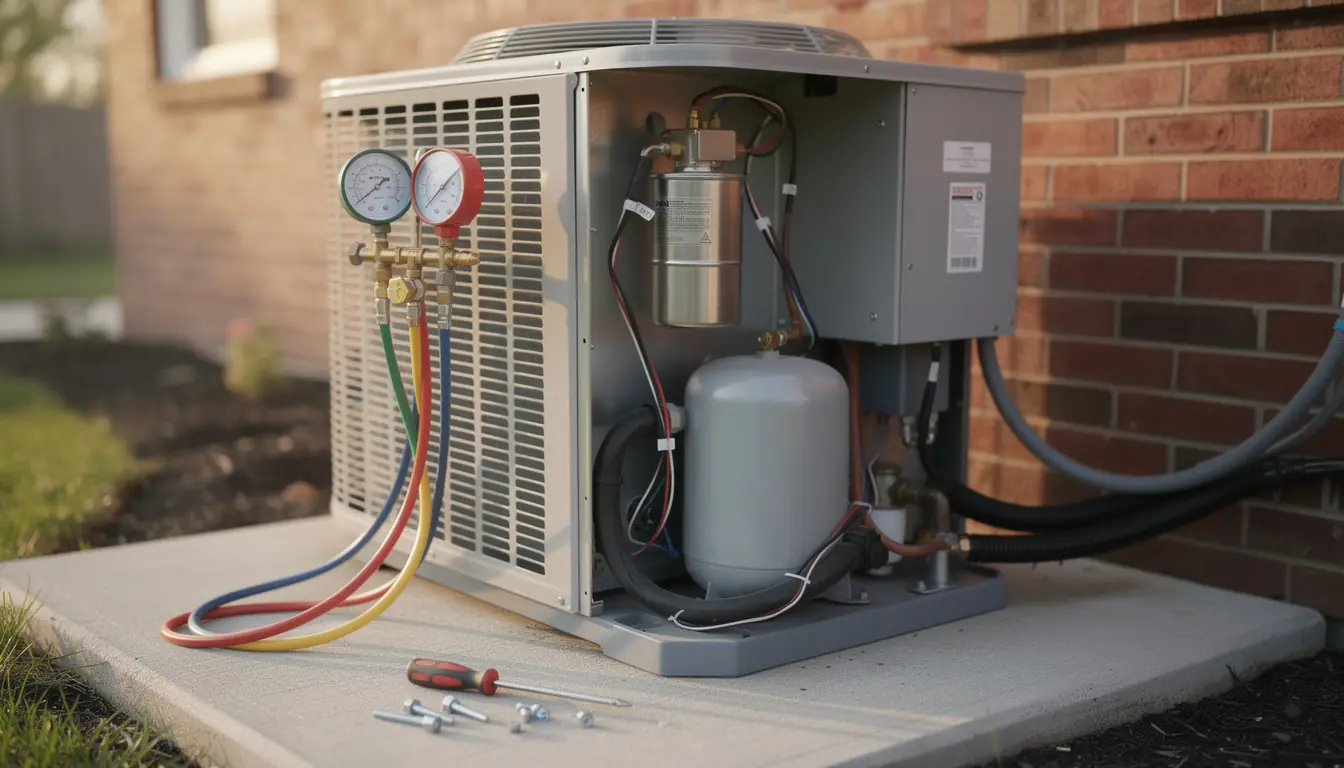
How a heat pump earns its keep here. A heat pump doesn't make heat, it moves it — pulling warmth out of outdoor air and pumping it inside, which takes a fraction of the electricity that making heat from scratch does. In a climate where most winter days sit in the 40s, that efficiency runs all season. And the same machine is your air conditioner in July, which in the Mid-South is the harder job anyway.
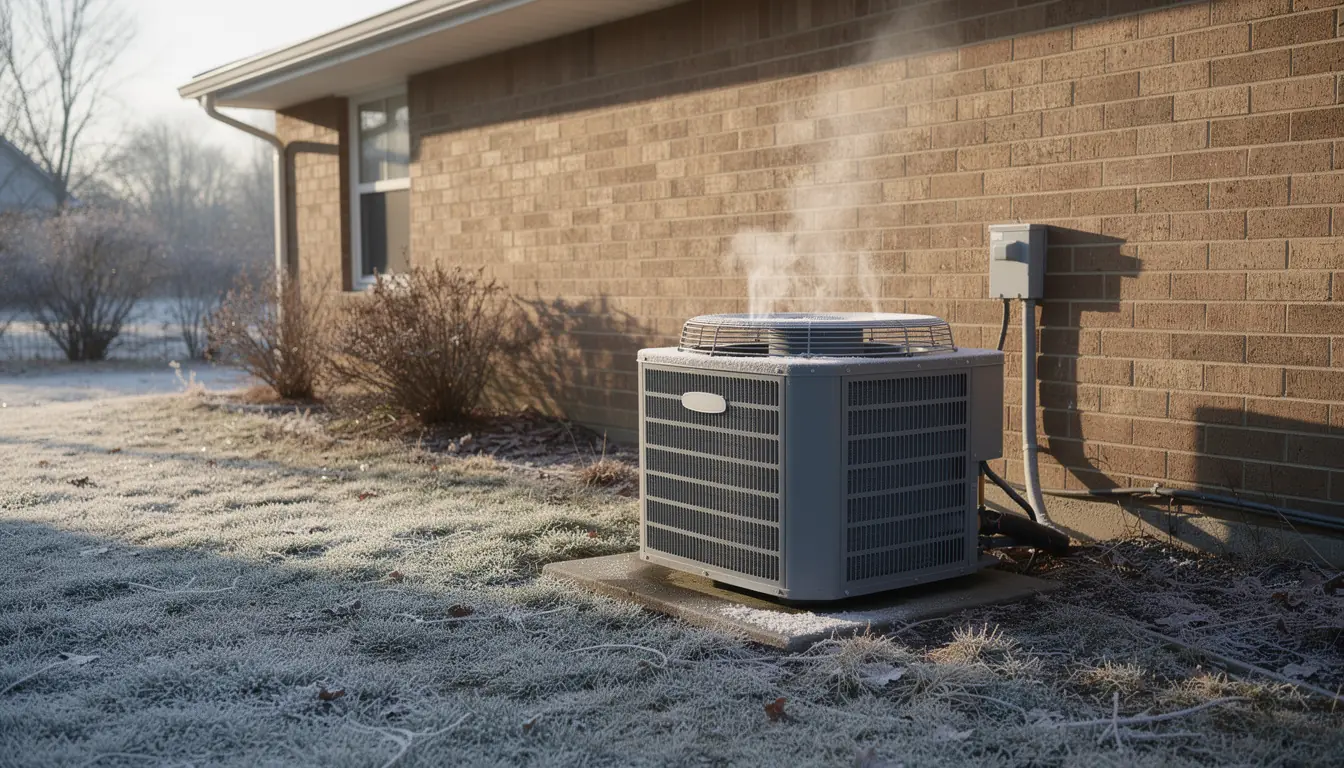
Where it struggles — and the EM HEAT bill shock. As the temperature drops toward freezing, there's less outdoor heat to move, so the system leans on its backup: electric strip heaters that make heat the expensive way. That's the January story we hear every year — "our bill doubled" — and it usually traces to a long cold snap of strip heat, or a thermostat switched to EM HEAT and forgotten. (EM HEAT is for emergencies — a failed outdoor unit — not for cold days. If yours is on and nothing's broken, turn it back.)
The case for a gas furnace. Gas makes deep, fast heat no matter what the thermometer says, and on the handful of nights the Mid-South drops into the teens, a furnace doesn't flinch. The catch in Tipton County is availability: plenty of homes outside town centers don't have natural gas service, and propane changes the cost math considerably. If you already have a gas line and a flue, that existing infrastructure is a real argument for staying with gas.
The best-of-both answer: dual fuel. A heat pump paired with a gas furnace runs the efficient machine for the 90% of winter it handles easily and hands off to gas for the hard freezes. It costs more upfront and it's the setup we most often recommend for larger homes that have gas available.
Our honest rule: all-electric newer builds (the Atoka and Arlington pattern) usually land on a quality heat pump; older homes with gas already plumbed often stay gas or go dual-fuel. Either way the sizing comes from a load calculation, not the old unit's sticker — and the quote comes before any work does: (901) 699-7763.