Every July we take dozens of calls that start the same way: "It's running, I can hear it, but it's blowing warm." Here's the same walkthrough our techs do — including the two steps worth trying before you pay anyone.
1. The filter (check this first, seriously). A clogged filter chokes airflow until the system can't move enough air to cool. Pull it out and hold it up to a light — if you can't see light through it, that may be your whole problem. This causes more "dead AC" calls than any mechanical failure.
2. The breaker. AC systems typically use two breakers — one for the indoor unit, one for the condenser outside. A tripped outdoor breaker leaves the fan inside running while the part that actually cools sits dead. Check the panel; if it re-trips immediately, stop and call — that's a short, not bad luck.
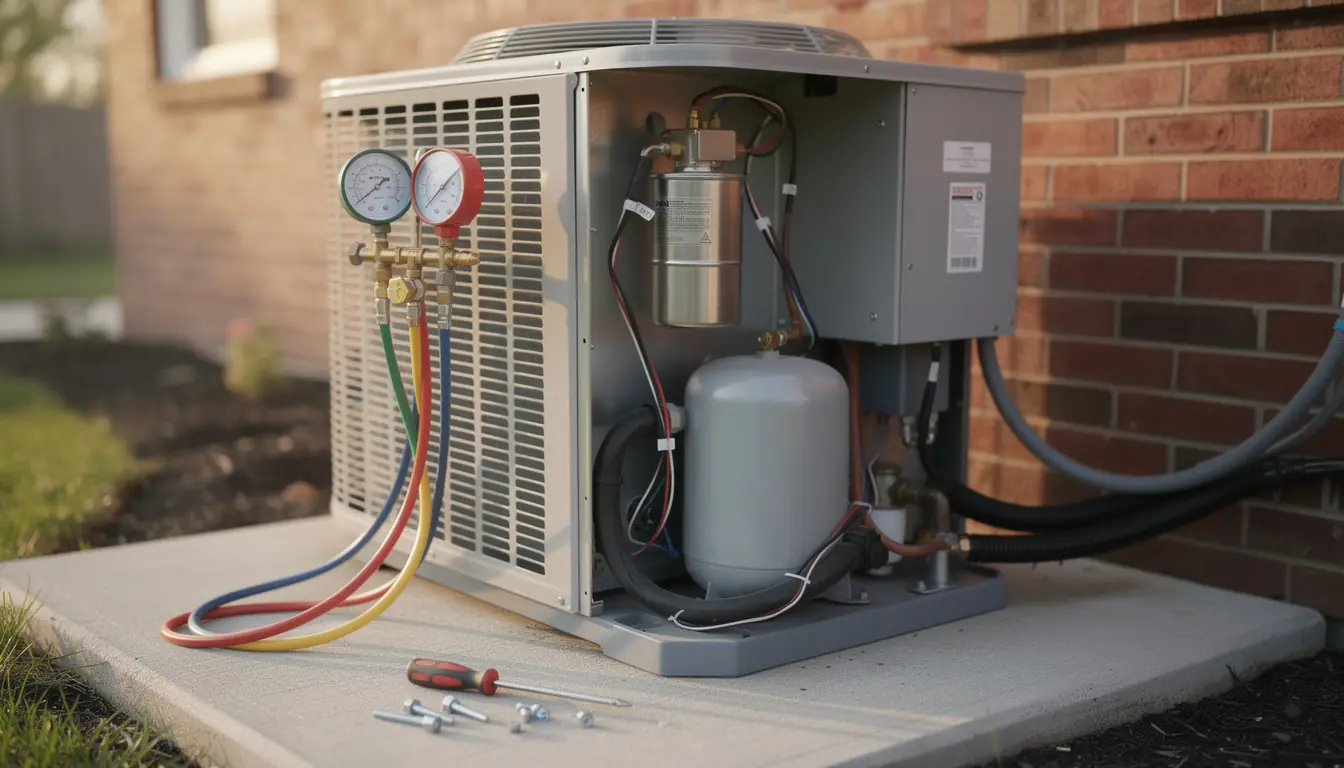
3. Low refrigerant (a leak, not "low gas"). Refrigerant doesn't get used up like fuel — if it's low, it leaked. Signs: ice on the copper lines, hissing at the outdoor unit, and air that's cool-ish but never cold. Topping it off without fixing the leak is renting your comfort by the month; a proper repair finds the leak first.
4. Frozen evaporator coil. Weak airflow or low refrigerant can ice the indoor coil into a solid block — then almost no air comes out at all. If you see ice anywhere, shut the system OFF and run just the fan for a few hours. Don't chip at it; those fins bend if you look at them wrong.
5. A failed capacitor. The single most common July failure. The capacitor gives the compressor and fan their starting kick; heat kills them by the dozen. Telltale: a hum from the outdoor unit whose fan isn't spinning. It's a fast, inexpensive fix — for a tech with the right part, which our trucks carry all summer.
The honest rule of thumb: filter and breaker are yours; everything past that involves high-voltage components and pressurized refrigerant. Prodigy runs same-day AC calls across Tipton County in season — (901) 699-7763, upfront price before any work starts.