Ask any tech what the most common cause of a struggling HVAC system is, and you won't hear anything exotic. It's the filter. A few dollars of pleated paper decides your airflow, your power bill, your coil's health, and a good chunk of your air quality — and it gets ignored for months at a time.
First truth: the filter's main job is protecting the MACHINE. Clean air for your lungs is the bonus. A choked filter starves the blower, ices the coil, and makes every part downstream work harder and hotter. Most "my AC is dead" calls that end in relief started with a filter that looked like gray felt.
MERV, in plain English: it's a catch-rating. MERV 8 catches dust and pollen basics and breathes easy — right answer for most homes. MERV 11–13 catches finer allergy and smoke particles — genuinely helpful IF your system has the airflow to push through it. The gas-station bargain filters below that mostly protect the machine from gravel. And the "highest number wins" instinct backfires: a max-MERV 1-inch filter on an ordinary system can restrict airflow enough to cause the exact problems you bought it to prevent. Filtration is a balance, not a trophy.
How often, around here: a standard 1-inch filter wants checking monthly in a West Tennessee summer — systems running near-constantly eat them fast — and changing every 1–2 months in heavy season, every 3 at the lazy end of the year. Homes with shedding pets or nearby field dust: shorter. Thick media filters (4–5 inch) go several months to a year; they're one of the quiet upgrades we like because they filter finer WITHOUT choking airflow.
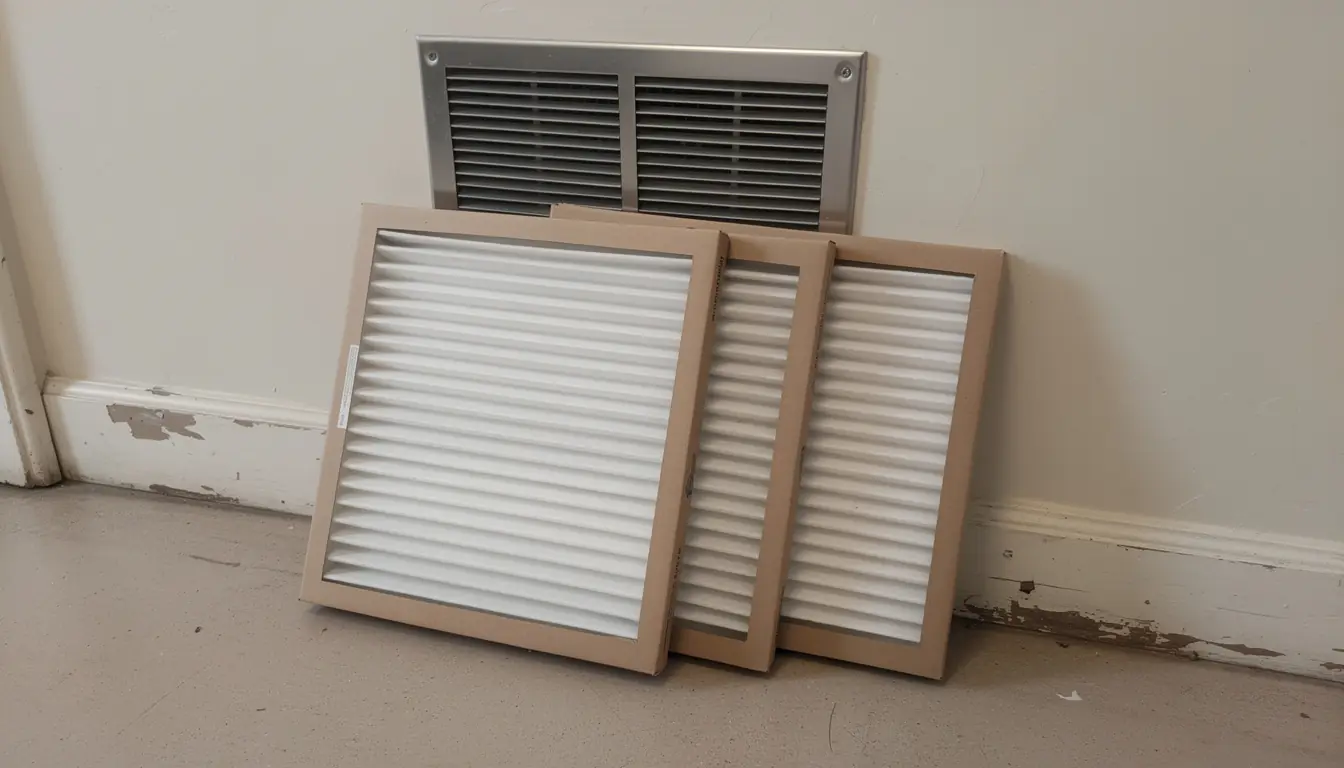
Two details everyone misses: the airflow arrow on the frame points TOWARD the unit/duct, not the room — backwards filters bow and whistle. And the size is printed on the frame; "close enough" leaves bypass gaps that let dust skip the filter entirely.
If filters are clean but the house is still dusty, the dust is probably arriving through duct leaks pulling from the attic or crawlspace — a sealing conversation, not a filter one. Filter checks are baked into every maintenance-plan visit; questions cost nothing: (901) 699-7763.