Tankless water heaters get sold like magic and tanks get dismissed as old technology — both framings are wrong. After a decade of installing both across Tipton County, here's how we actually walk families through it.
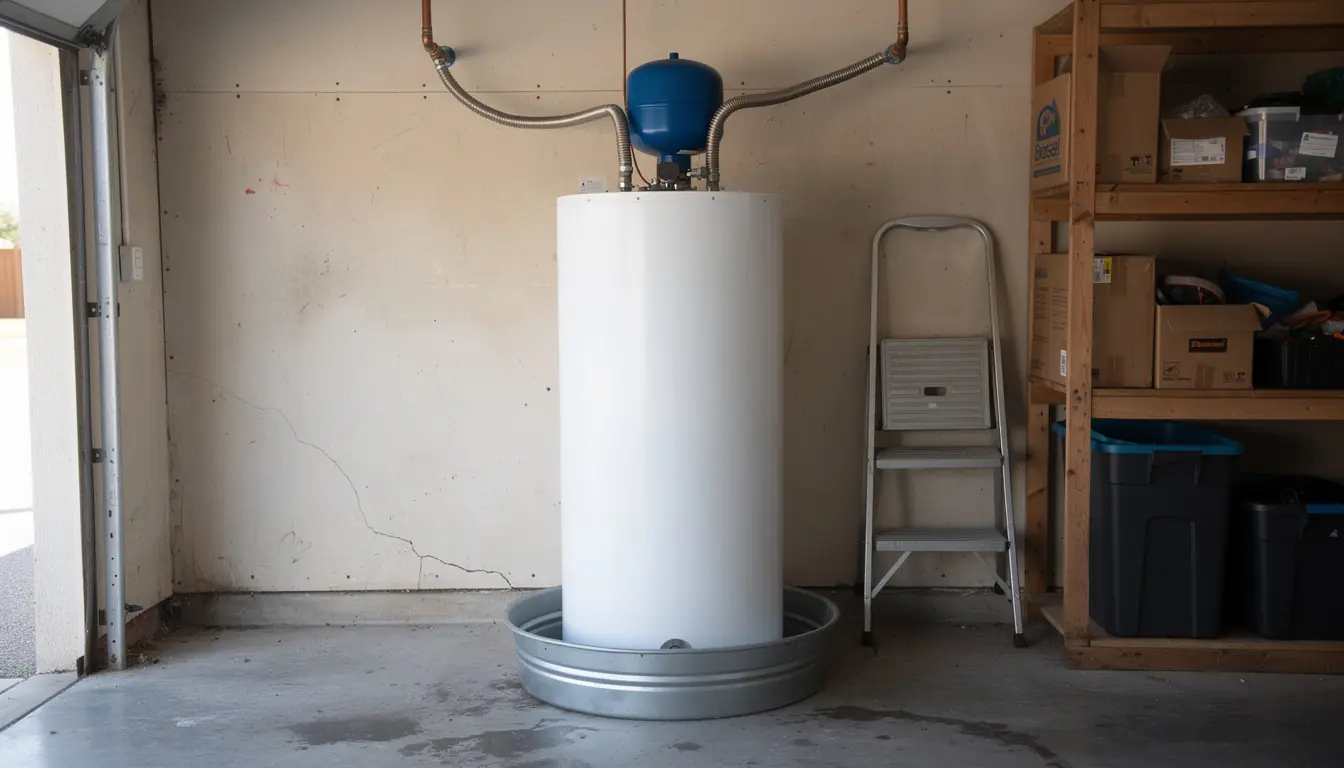
The case for a tank: it's cheaper upfront — often half the installed cost — simpler to repair, and any plumber can service it. If your household's hot water needs are steady and modest, a quality 50-gallon tank is honest, boring value. The catch: it stores 50 gallons whether you need them or not, reheating around the clock, and when it dies at year 10–12 it often dies wet, on the floor of your garage.
The case for tankless: endless hot water (it heats on demand), a 20-year service life instead of 10–12, energy savings of 20–30% for most families, and it hangs on a wall instead of hogging floor space. The honest catches: installed cost runs meaningfully higher, and many homes need a gas line upsize to feed it — a burst of on-demand heating draws more gas than a tank's slow burn. That's part of the quote, not a surprise later.
The West Tennessee wrinkle: our water. Much of the Mid-South runs moderately hard water, and hardness is tankless enemy #1 — scale builds in the heat exchanger. A tankless here should get an annual descaling flush (simple, and part of our maintenance plan). Skip it for five years and the efficiency story falls apart.
Our rule-of-thumb guidance: family of 4+ who runs out of hot water on school mornings, planning to stay in the house 8+ years → tankless usually wins the long math. Smaller household, tighter budget, or a house you may sell soon → a quality tank is the smarter spend. Either way, if your current tank is 10+ years old, replace on your schedule — not the morning it lets go. Straight answers and upfront quotes: (901) 699-7763.