Some houses just seem to make dust — wipe the shelves Saturday, write your name in it by Wednesday. Before you blame housekeeping or the gravel road, know this: in most chronically dusty homes, the HVAC system is manufacturing the problem, and it's fixable.
Your ducts may be vacuuming the crawlspace. Return ducts — the ones that pull air back to the system — run through attics and crawlspaces, and when their seams leak, they inhale from wherever they are. That means insulation fibers, attic dust, and crawlspace air being pulled in, filtered poorly, and blown into your living room all day. If the dust in your house looks gray and fibrous, this is the prime suspect, and duct sealing is the fix.
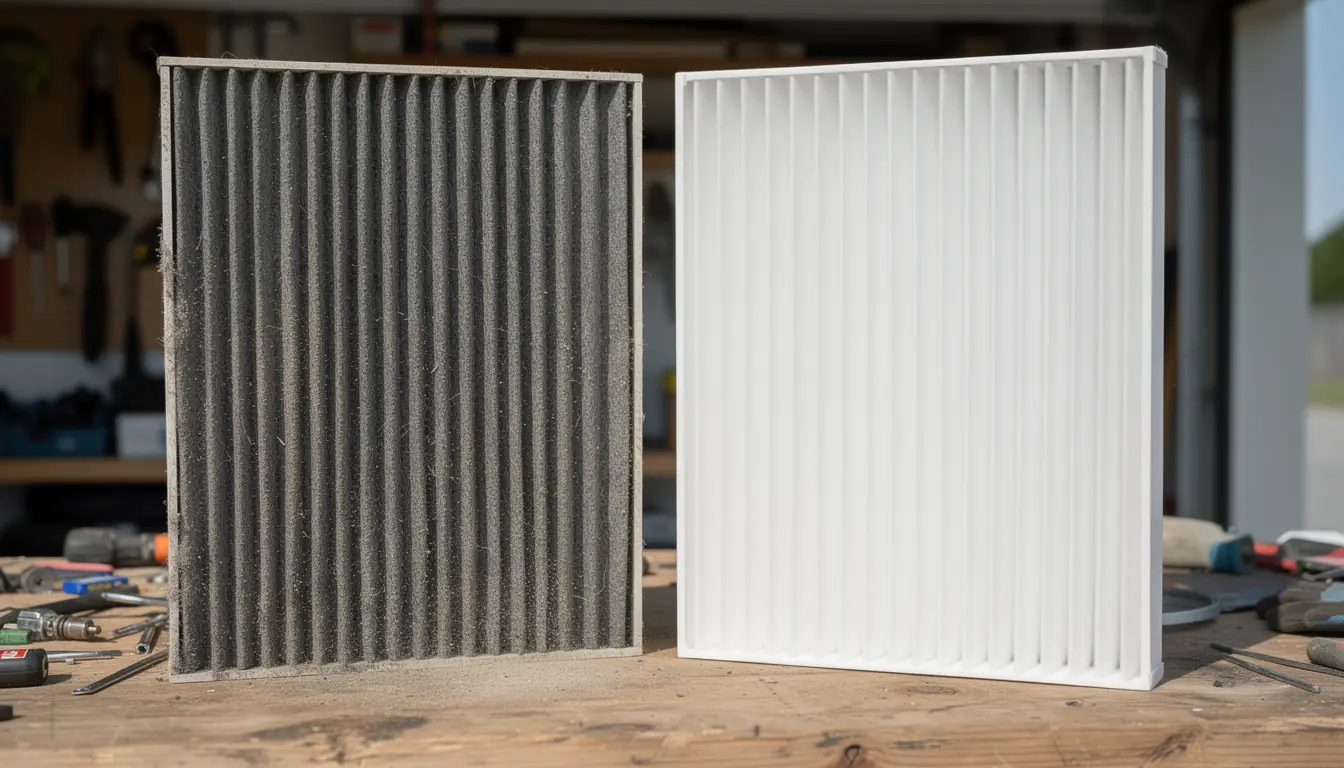
Filter bypass beats a good filter. A quality filter does nothing for the air that goes around it. A filter that's the wrong size, bowed from age, or sitting loose in its slot lets a surprising share of air skip filtration entirely. Check the fit: it should sit snug, no visible gaps, arrow pointing toward the unit. And a rock-bottom-grade filter catches gravel, more or less — a mid-grade pleated filter is the sweet spot for most systems here.
Winter makes it worse on purpose. Dry air lets dust float longer and cling with static. If your dust problem peaks in heating season alongside shocked doorknobs and cracked lips, humidity — not just filtration — is part of the answer.
What about duct cleaning? Honest answer: it has its place — after renovation dust, pest problems, or visible growth — but for everyday dustiness it usually treats the symptom. Sealed ducts and a properly fitted filter fix the cause; cleaning dirty ducts that keep leaking is mowing a lawn that's being reseeded daily.
The test that settles it: we can inspect the duct runs, check the return side for leaks, and tell you which of these your house is actually doing — before anyone sells you anything. If you're dusting on a schedule and losing anyway, the house is telling on its ductwork: (901) 699-7763.